· New Zealand · 4 min read
Test day: what to expect when you sit the LNAAT
One of the most unsettling things about a high-stakes test isn't the content — it's the unknown. What does the interface look like? How many questions are there?
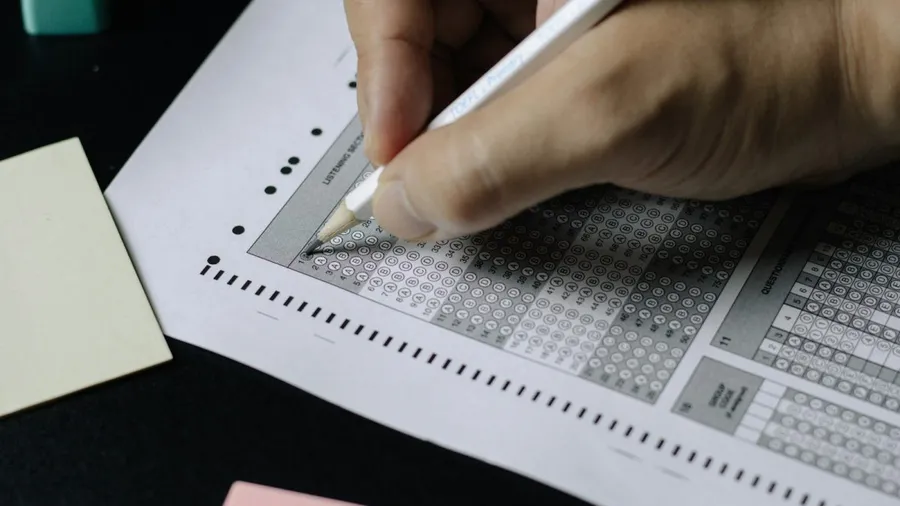
Knowing what to expect is half the battle
One of the most unsettling things about a high-stakes test isn’t the content — it’s the unknown. What does the interface look like? How many questions are there? What happens if you get stuck?
The LNAAT is delivered online through the TEC platform at assess.literacyandnumeracyforadults.com. Once you know what to expect, you can walk in — or sit down — with your attention fully on the maths, not the format.
Before test day: the practical checklist
- Check your NSN (National Student Number). You’ll need it to access the assessment. Most ITE applicants have one from their secondary schooling — if not, your provider can help you get one.
- Confirm your session with your provider. Your ITE provider arranges access to the LNAAT — you won’t book directly through TEC. Make sure you know the date, time, and where you’ll be sitting it (on-campus or remotely).
- Check your device and internet connection if sitting remotely. Use a laptop or desktop (not a phone) and test your browser on the platform beforehand if possible.
- Get a good night’s sleep. Seriously — cognitive performance under time pressure is meaningfully better when you’re rested.
The format: what you’ll see on screen
The LNAAT is an online adaptive assessment. That means:
- The questions you see are chosen in response to how you answer previous ones — the test is calibrating your level as you go.
- You’ll answer approximately 30–35 questions.
- You have a maximum of two hours, though most people finish in around an hour.
- Questions are not all multiple-choice. You’ll encounter a mix of selected-response (pick the right answer), short-answer (type a number or word), and interactive items (click on an image, drag an element into place).
Read each question carefully before answering — the interactive and short-answer items in particular reward careful reading of what’s being asked.
Question types to be ready for
Selected-response (MCQ)
You’re given a question and typically three or four options. Click your answer and move on. These are the most familiar format for most people.
Short-answer
You type your answer — a number, a word, or a short phrase. Pay attention to units (e.g. the question might ask for the answer in metres, not kilometres) and spelling where it applies.
Interactive items
These might ask you to click on a correct point on a graph, match items by dragging, or identify a value on a scale or image. They’re testing the same numeracy knowledge as written questions — just in a different format. If you haven’t practised with this type before, they can feel unfamiliar. The fix is simply to encounter them in practice before you meet them in the real test.
During the test: a few useful habits
- Read the question twice before doing any working. Especially for data and measurement questions, which contain a lot of information.
- Work on paper if it helps. Having a notepad beside you for working is fine — use it freely for calculations, especially for multi-step problems.
- Don’t spend too long on one question. If you’re genuinely stuck, move on and come back if time allows. The adaptive format means the test is gathering signal across many questions — one difficult question isn’t your whole result.
- Flag uncertain answers so you can revisit them at the end.
- Sense-check your answers. Before you submit, ask: does this answer seem like a reasonable number? Is it in the right unit? Sometimes a quick look is enough to catch a slip.
What happens after
Your result is reported as a score on the LNAAT scale. The pass standard for the NZ teaching council maths requirement is Step 6 (score 690–800) — the highest step on the scale, calibrated at approximately NCEA Level 2. Your ITE provider will confirm exactly how the result is communicated and what happens next in your application process.
If you don’t reach the required score on your first attempt, check with your provider about re-sit options and timing.
The best preparation for test day is good preparation beforehand
There are no shortcuts on the day itself — but knowing the format, having practised across all the core topics, and arriving rested goes a long way. The free SN Academy diagnostic is a good place to start: it gives you an honest read on where you stand, so you can use your preparation time well.
— The people of SN Academy