· United States · 4 min read
Praxis Core at home vs at a test center: how to choose
ETS offers the Praxis Core at both a physical test center and via remote proctoring at home.
ETS offers the Praxis Core at both a physical test center and via remote proctoring at home. Neither option is universally better — the right choice depends on your home environment, your tech setup, and how you perform under different kinds of pressure. Here’s what you need to know to make a confident decision.
The test center option
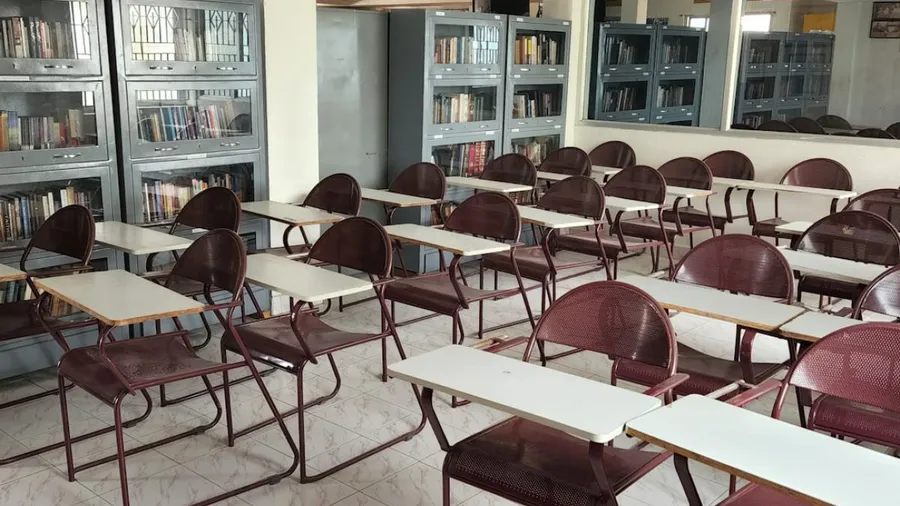
Praxis Core is administered at Prometric test centers across the country. You book a slot, show up with valid ID, and sit the test in a supervised room alongside other candidates.
What you get:
- A quiet, controlled environment — no ambient noise from your household, no worrying about your internet connection, no risk of a roommate walking in during the test.
- Technical support on-site if something goes wrong with your workstation.
- A structured, familiar format: check in, sit down, test begins. Many candidates find this predictability calming.
- No need to clear a room, configure a computer, or worry about whether your setup passes the system check.
What to consider:
- You need to travel to the center, which may involve early starts, commuting costs, and limited availability in rural areas.
- Test centers book out — especially around popular testing windows. Register well in advance.
- You’ll be in a room with other people typing, which some candidates find distracting.
The at-home (remote proctored) option
ETS also offers Praxis Core via remote proctoring, where you sit the test at your own computer, watched by a live proctor via webcam.
What you get:
- No travel, no commute, no need to book a seat at a center.
- More scheduling flexibility — at-home slots can be more available, including earlier morning or evening windows.
- Your own chair, your own desk, your own monitor — if you’ve been practicing at that same setup, you’re in a familiar environment.
What to consider:
- ETS has strict technical requirements: a reliable, fast internet connection, a compatible browser, a working webcam and microphone, and a clean desk in a private room. Check the current requirements on the ETS website well before your test date.
- Your testing space must be completely clear — no papers, notes, second monitors, phones, or other devices. You’ll be asked to pan the camera around the room.
- Connectivity issues are your problem to solve. If your internet drops mid-test, you’ll need to contact ETS — which is stressful. If your home internet is inconsistent, this is a real risk.
- Living with other people adds complexity. A household member walking into the room during the test can result in the session being flagged or terminated. You need genuine privacy for the full duration.
- Technical glitches with remote proctoring software are not uncommon. Build time in advance to run the system check and iron out any issues.
How to choose
Ask yourself these questions honestly:
- Is my home environment genuinely quiet and private for 3+ hours? If you have young children, housemates, or thin walls, the test center is the safer choice.
- Is my internet connection reliable? If it’s inconsistent, don’t risk it. The test center removes that variable entirely.
- How do I perform in unfamiliar environments? If you’re someone who freezes up in formal, institutional settings, sitting the test at your desk might actually help your performance. If you’re easily distracted at home, the test center’s controlled environment is worth the commute.
- Is there a test center reasonably close to me? If the nearest center is two hours away, remote proctoring may be the practical choice regardless of preference.
Simulate your actual test environment in practice
Whichever option you choose, practice in that environment. If you’re sitting at home, do your full-length practice tests at your desk, with the timer running, in the same physical setup. If you’re going to a test center, practice sitting at a desk with minimal personal setup — no sticky notes, no personal items in front of you. The goal is to walk into (or log into) the real test and feel like you’ve done this before.
Booking and deadlines
Register at praxis.ets.org. Check the registration deadlines and score reporting timelines for your state’s teacher licensure requirements — some educator preparation programs need scores by a specific date for enrollment or program completion. Build your test date backwards from that deadline, not forwards from today.
Either format, properly prepared for, gives you every opportunity to pass. Choose the one that removes the most variables — and then prepare accordingly.
Start with the free SN Academy Praxis Core diagnostic →
— The people of SN Academy